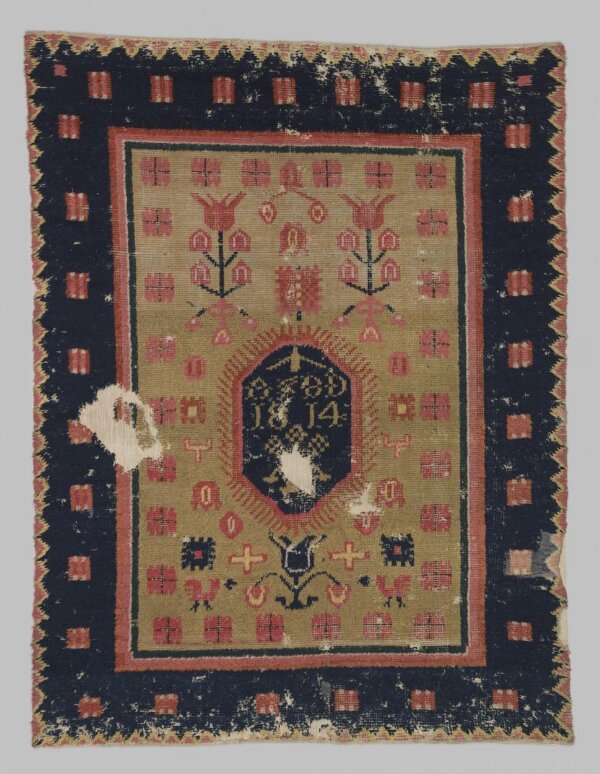
Finnish ryijy (rya) with long knotted pile, dated 1814 (V&A T.123-1924)
Object · not yet checked at the source · Image permission pending
- Date
- 1814 (object); documented from mid-15th century
- Place
- Finland
- Held by
- Victoria and Albert Museum
- Number
- T.123-1924
- Materials
- wool pile, linen warp
- Themes
- Rug-making techniques, Woven carpet
Cite this source
Research notes
How it works: rya/ryijy is knotted pile with long, widely spaced rows of knots and many ground picks between them, giving a shaggy, heavy fabric first used as a bedcover. This object: woollen pile knotted on linen warps, marked with the initials AFBD and the date 1814. Given by Roger Fry, and the 1924 file mentions a moth-eaten patch. The V&A also has a ryijy dated 1799 (T.8-1914). History: the Finnish intangible-heritage wiki puts the earliest certain reference in the mid-15th century, tied to a castellan of Häme Castle, and says early ryijys were bedcovers made by professional weavers at castles and Crown manors. The Hämeenlinna museum cites a 1547 Häme Castle inventory listing 55 rugs as the earliest record of colourful ryijys. Bukowskis says the oldest surviving Finnish ryijy is 17th-century. The claim of a 9th-century (Viking) origin (Wikipedia, dealers) has no dated evidence. Sources: https://collections.vam.ac.uk/item/O102075/carpet-unknown · https://wiki.aineetonkulttuuriperinto.fi/wiki/Ryijy_tradition · https://hmlmuseo.fi/?p=12964 · https://wikipedia.com/wiki/Ryijy Research note (Oct 2026): from search results; pages not opened.